
Technical publication Wccftech recently put Nvidia’s DLSS 4.5 and AMD’s FSR 4 upscaling technologies head‑to‑head in several modern games to see how each performs and how image quality stacks up. The tests used comparable hardware — including Radeon RX 9060 XT and GeForce RTX 5060 Ti graphics cards — at 1440p resolution to measure how each upscaler handles real‑world gaming workloads.
Both upscalers represent the latest advances from their respective developers. DLSS 4.5 builds on Nvidia’s transformer‑based super sampling and multi‑frame generation tech to offer improved image reconstruction and dynamic performance scaling. Meanwhile, FSR 4 from AMD brings enhanced spatial upscaling and frame generation features, expanding its compatibility across titles supported by the technology.
Cyberpunk 20277 Benchmarks – DLSS 4.5 & FSR4:
Performance and image quality differences
In the side‑by‑side comparisons, both upscalers showed clear improvements over previous versions and native rendering at high resolutions. Tests highlighted that DLSS 4.5 often delivered higher overall image clarity and stability, especially in motion, and tended to preserve detail better in complex scenes. Many gamers and reviewers pointed to DLSS 4.5’s advanced transformer model and multi‑frame generation as giving it an edge in visual fidelity and responsiveness.
That said, FSR 4 has made noticeable strides compared with older upscaling tech and narrowed the gap with Nvidia’s solution in many scenarios. In titles that support it, FSR 4 provided competitive visuals and performance, although some side‑by‑side comparisons suggested the overall quality and temporal stability still leaned in Nvidia’s favor.
Community feedback also reflects this mixed landscape: some users report that DLSS 4.5 feels visibly sharper and cleaner at the same performance tier, while others note that FSR 4 is “close enough” in most cases and offers broader compatibility on AMD hardware.
Hogwarts Legacy Benchmarks – DLSS 4.5 & FSR4:
Real‑world context and how it matters
For PC gamers, the practical difference between these technologies can affect not only visuals but also framerate targets and smoothness. DLSS 4.5’s dynamic multi‑frame generation often helps Nvidia GPUs push higher average frame rates at 4K and high refresh rates, which is especially noticeable on RTX 40 and 50 series cards. FSR 4’s open and hardware‑agnostic nature means it works across a broader range of devices — including Radeon cards — but may not achieve the same level of detail reconstruction in every title.
Ultimately, both upscalers are effective tools for modern gaming. DLSS 4.5 tends to shine in image quality and performance scaling, while FSR 4 continues to evolve and offers solid support where Nvidia’s tech isn’t available. Gamers choosing between them should consider game support, hardware compatibility, and personal preferences for visual quality versus raw performance.
Sources: nvidia, mobidevices, wccftech
Subscribe!
Subscribe to our newsletter and be in touch with high-tech news
Top Read
A LEGO game wants RTX 3080: Why LEGO Batman’s system requirements shock everyone

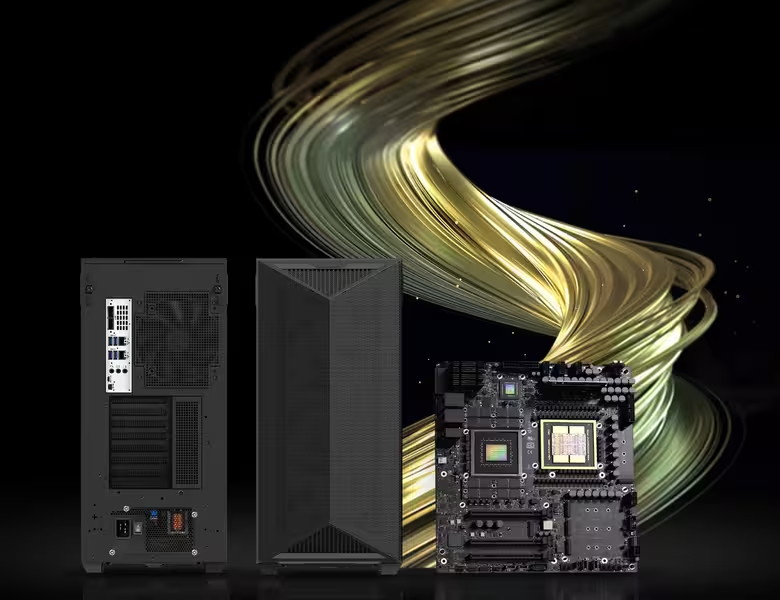
MSI launches XpertStation WS300 with Nvidia GB300 Blackwell: up to 496GB RAM and supercomputer hardware in desktop format
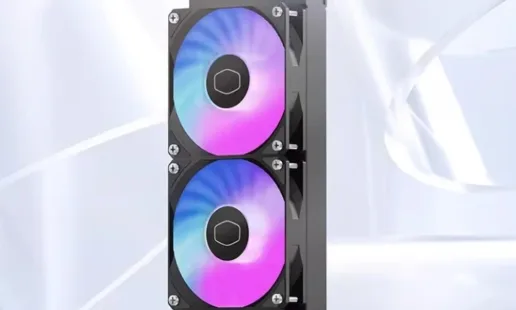
Cooler Master’s G360 Dragon Shadow SE Puts an Infinity Mirror on Your CPU Block for $66
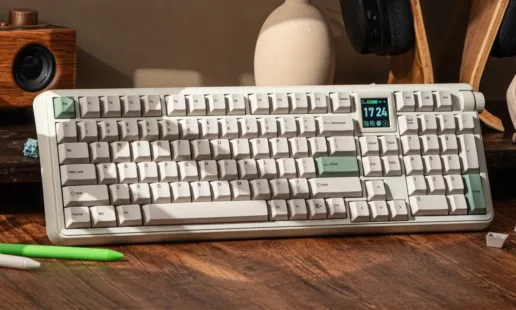
EPOMAKER RT100 PRO Ships With a Screen You Can Rip Out for Extra Keys
Intel Core Ultra 7 270K Plus and Core Ultra 5 250K Plus: 24 Cores, 5.5 GHz, $299
