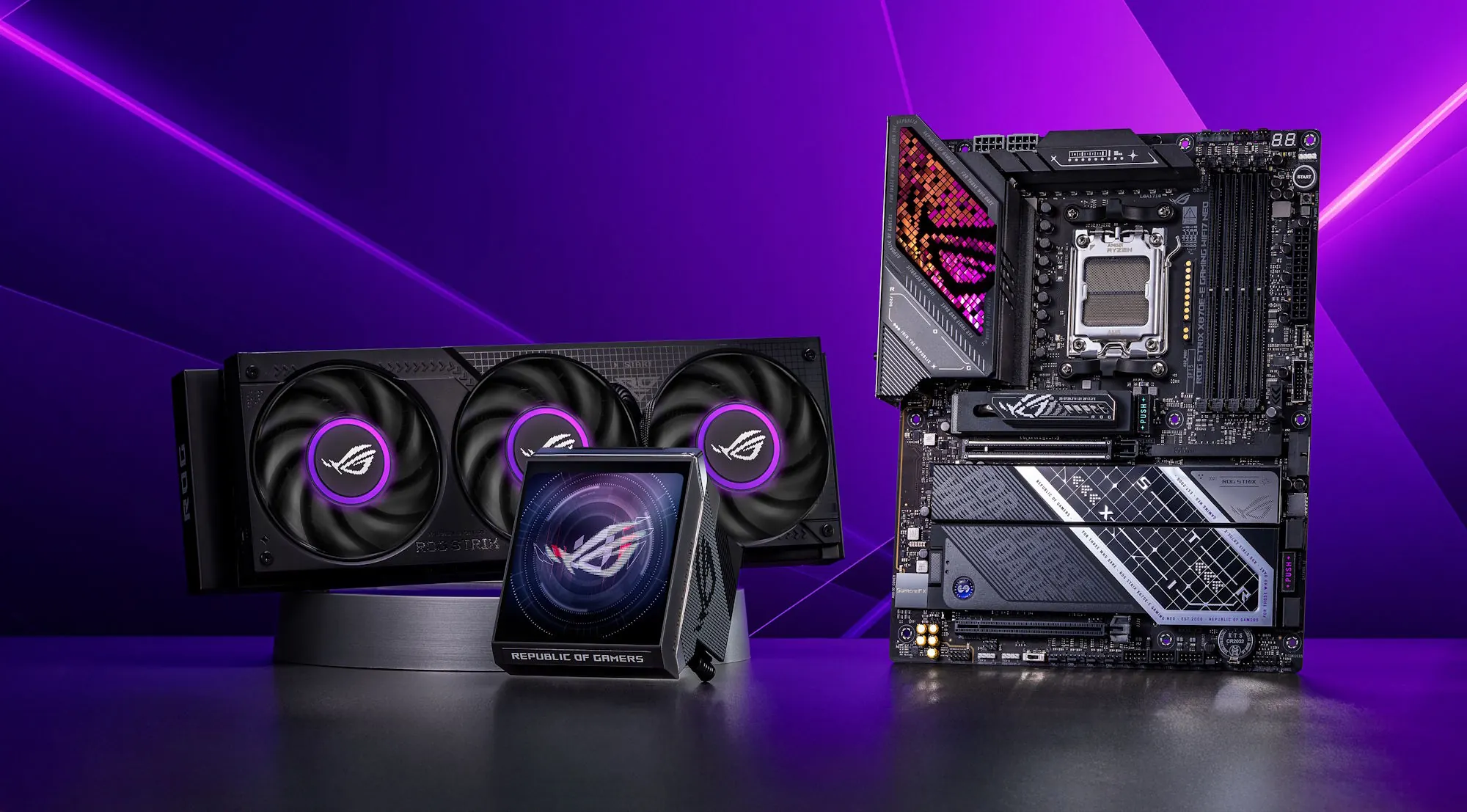
ASUS launches a wave of ROG Strix products for 2026, including the XG27UCG Gen2 monitor, Strix Neo AM5 boards with 64MB BIOS, LCD AIO coolers, and new gaming peripherals.
ASUS is kicking off 2026 with a broad refresh of its ROG Strix ecosystem, spanning cooling, displays, AM5 motherboards, keyboards, and external storage. Rather than a single flagship launch, this is a coordinated update aimed squarely at enthusiast PC builders.
Here’s what actually stands out and who each product is for.
ROG Strix IV 360 ARGB LCD: Bigger display, familiar formula
The new ROG Strix IV 360 ARGB LCD headlines ASUS’ cooling updates. It features a 5-inch IPS LCD integrated into the pump block, designed for system monitoring widgets, custom animations, or branding.
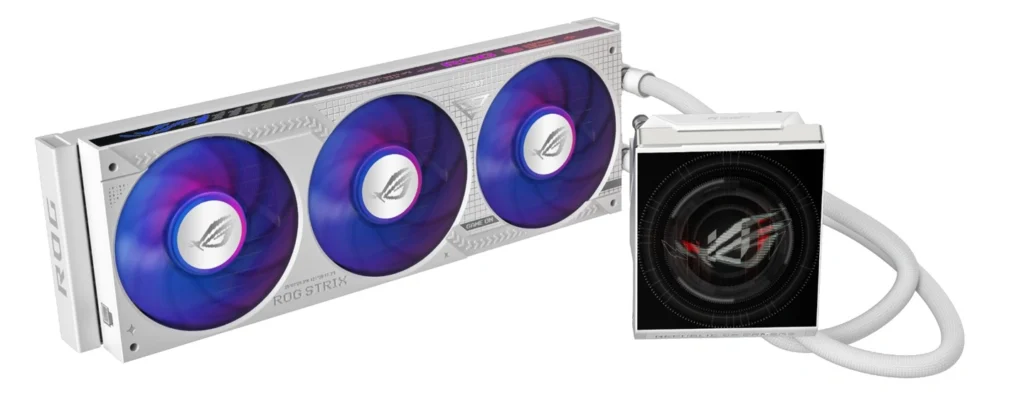
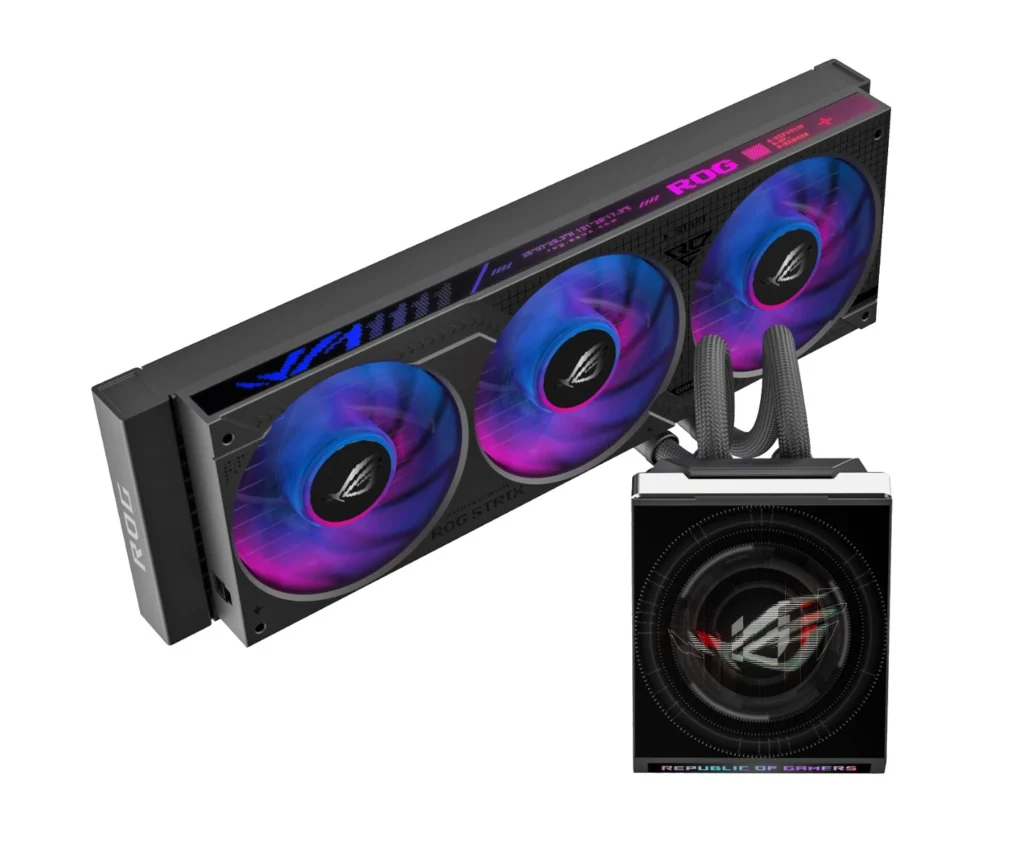
ASUS is also launching a more affordable Prime II 360 ARGB LCD, which uses a smaller 3.95-inch 720p IPS display but keeps the triple ARGB fan configuration.
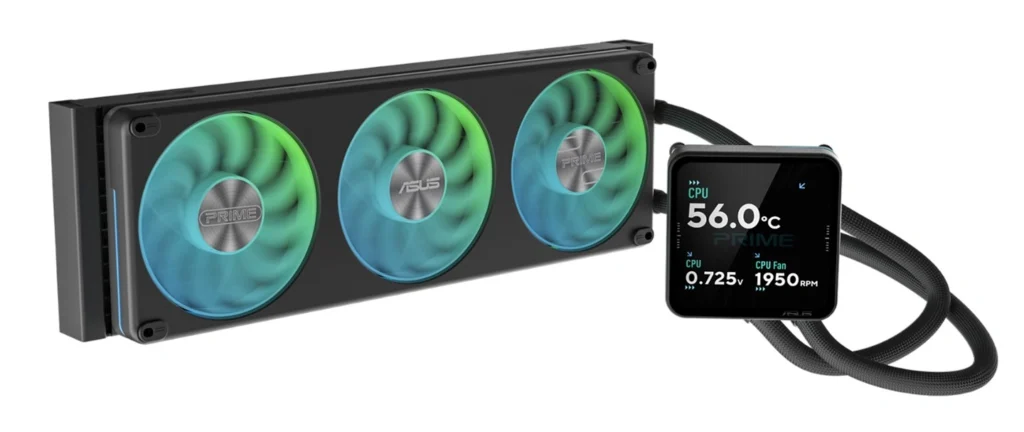
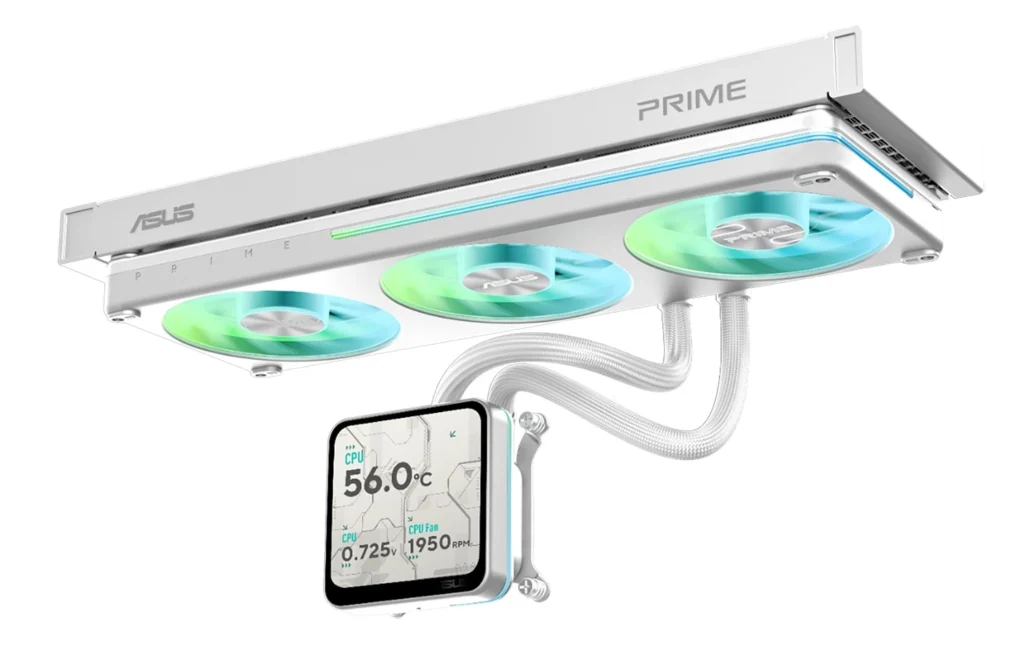
Both models introduce ASUS’ new AIO Q-Connector, intended to reduce cable clutter by consolidating fan and RGB wiring.
What’s less clear at least so far is whether thermal performance or pump design has changed meaningfully versus the previous generation. Based on specifications alone, this appears to be an evolution focused more on aesthetics and cable management than raw cooling gains.
Who it’s for: Builders prioritizing visual presentation in tempered-glass cases.
Less relevant for: Users focused strictly on noise-normalized thermal performance per dollar.
ASUS has not yet disclosed pricing.
ROG Strix XG27UCG Gen2: 4K at 162Hz or 1080p at 485Hz
The ROG Strix XG27UCG Gen2 (XG27UCGR) is arguably the most technically interesting product in this wave.
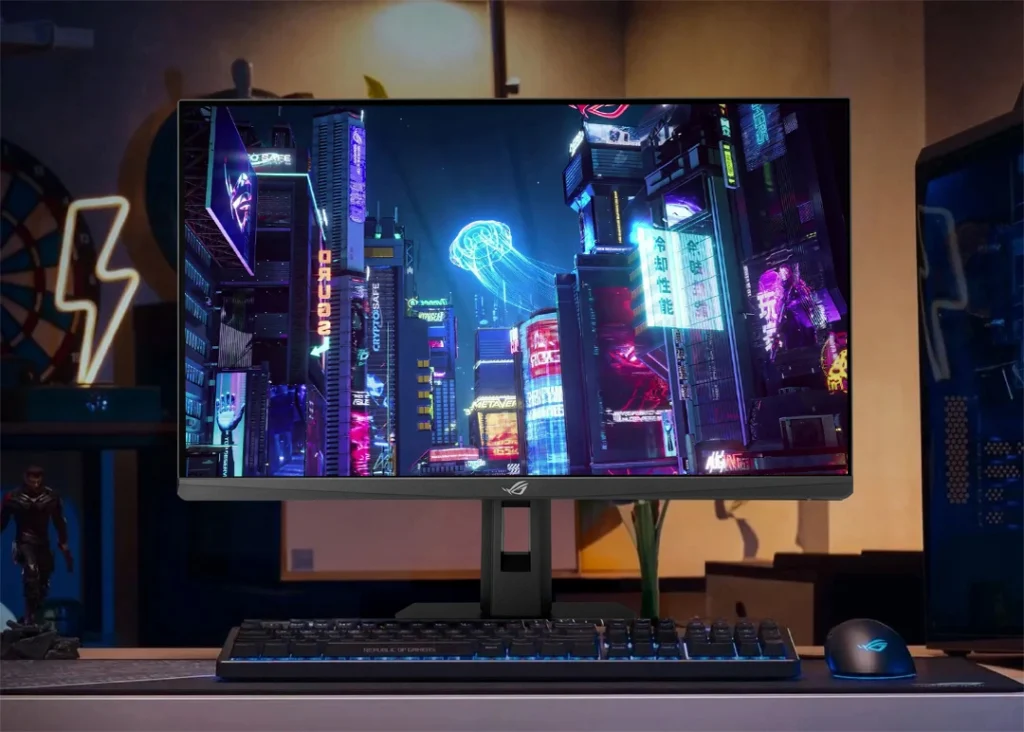
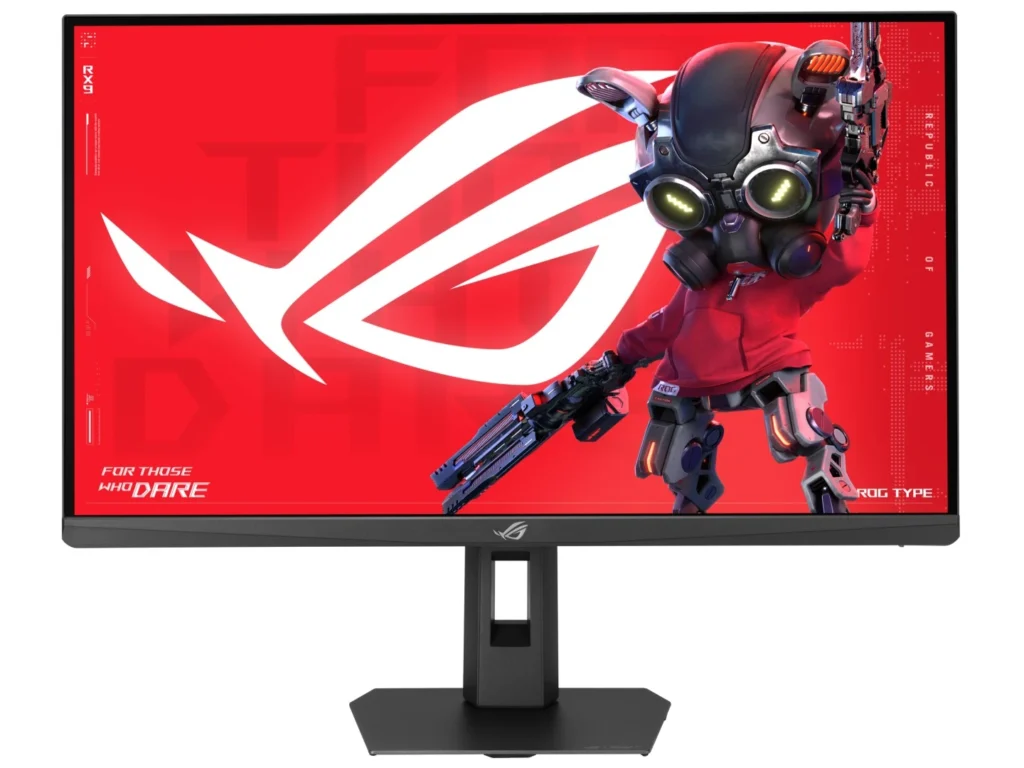
This 27-inch Fast IPS monitor supports dual operating modes:
- 4K (3840×2160) at 162Hz
- Full HD (1920×1080) at up to 485Hz
Yes — 485Hz!
The panel is rated for 0.3ms GtG response time, 600 nits peak brightness, 95% DCI-P3 coverage, and DisplayHDR 400. It supports ELMB Sync, allowing backlight strobing alongside adaptive sync — a feature competitive players tend to value.
In practical terms, 4K at 162Hz targets high-end GPUs (think RTX 4080/4090-class or next-gen equivalents), while the 485Hz mode is aimed squarely at esports players chasing maximum motion clarity in titles like Valorant or CS2.
The real question is diminishing returns: the jump from 360Hz to 485Hz is measurable, but whether it’s perceptible outside top-tier competitive play remains debated.
Connectivity includes DisplayPort 1.4, HDMI 2.1 FRL, and USB-C (DP Alt Mode, 15W PD). There are no built-in speakers.
ROG Strix Neo AM5 Boards: 64MB BIOS as future-proofing
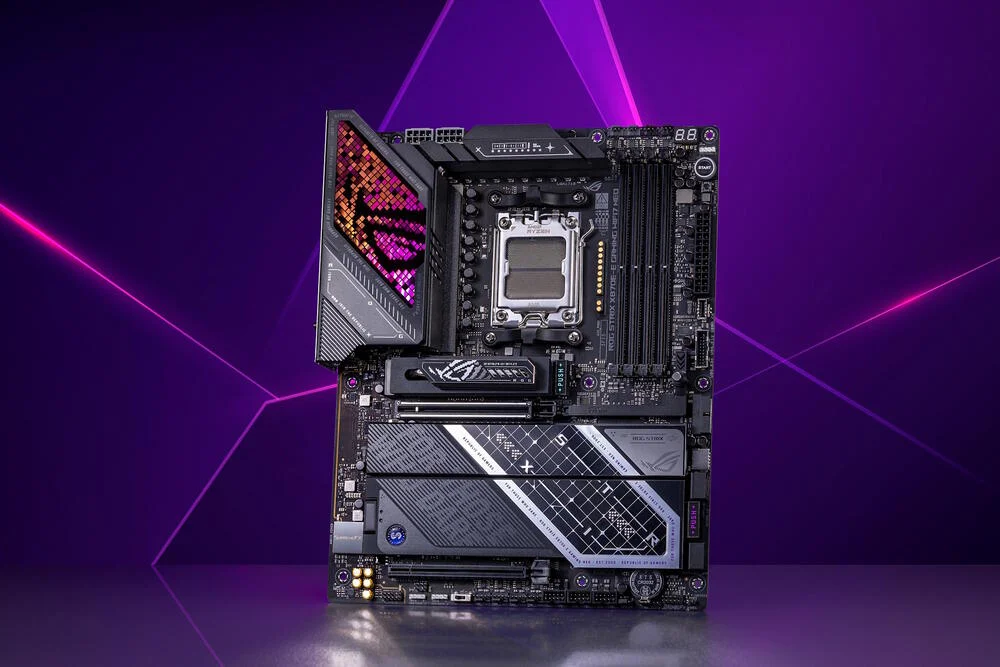
ASUS has refreshed several AM5 boards under the Strix Neo branding, including:
- ROG Strix X870E-E Gaming WiFi 7 Neo
- ROG Strix X870E-A Gaming WiFi 7 Neo
- ROG Strix B850-F Gaming WiFi 7 Neo
- ROG Strix B850-A Gaming WiFi 7 Neo
The key upgrade is a move to a 64MB BIOS ROM, doubling the capacity found on many earlier AM5 boards.
This matters more than it might sound. During the AM4 era, several motherboards ran into ROM size limitations when adding support for newer Ryzen CPUs, forcing vendors to remove older CPU compatibility. By expanding BIOS capacity now, ASUS appears to be insulating these boards against similar constraints as AMD’s AM5 platform evolves.
ASUS is also using the extra space to pre-install Wi-Fi drivers, allowing internet access during Windows 11 setup without external media — a small but practical quality-of-life feature.
These boards remain squarely in the upper mid-range to high-end AM5 segment, targeting Ryzen 7 and Ryzen 9 builders rather than entry-level systems.
ROG Strix Morph 96 Wireless: Enthusiast features in a compact layout
The ROG Strix Morph 96 Wireless adopts a 95% layout — nearly full-size with a more compact footprint — and leans into enthusiast keyboard design trends.


It includes:
- Gasket-mounted structure
- Hot-swappable PCB
- South-facing RGB
- Polycarbonate plate
- ROG NX V2 mechanical switches
- Tri-mode connectivity (USB-C, 2.4GHz, Bluetooth)
ASUS also integrates its SpeedNova wireless technology, designed to reduce latency in 2.4GHz mode.
ROG Strix Aiolos: 20Gbps External SSD Enclosure with RGB
The ROG Strix Aiolos is a USB 3.2 Gen 2×2 (20Gbps) SSD enclosure supporting M.2 2280/2260/2242 NVMe and SATA drives.
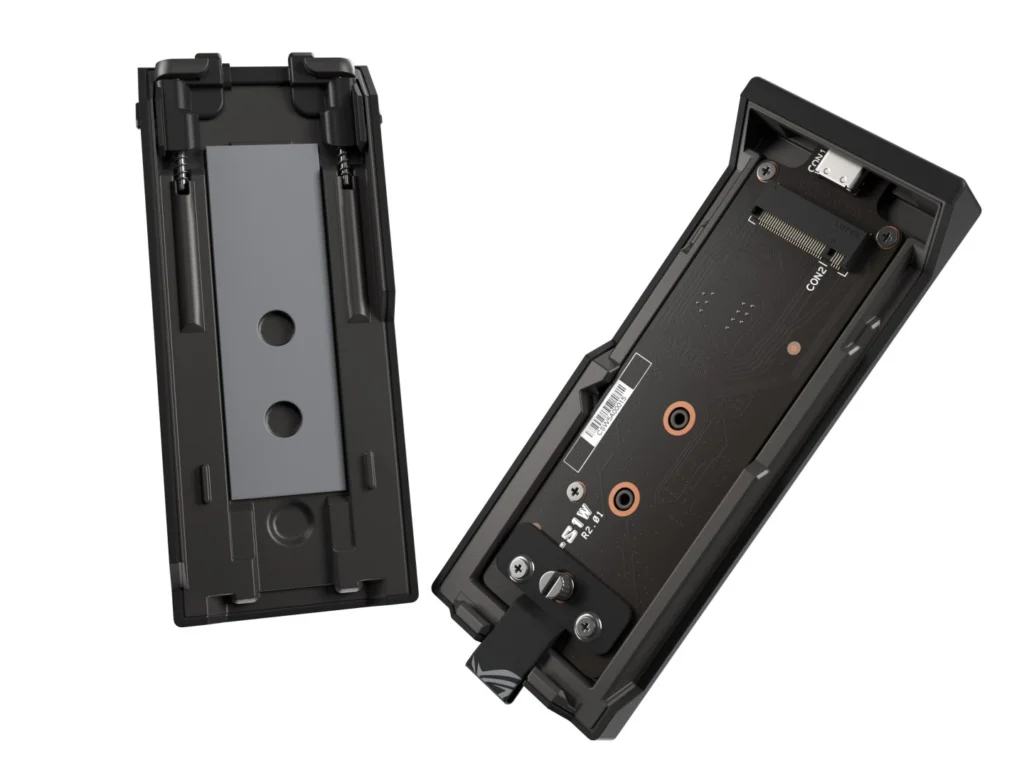
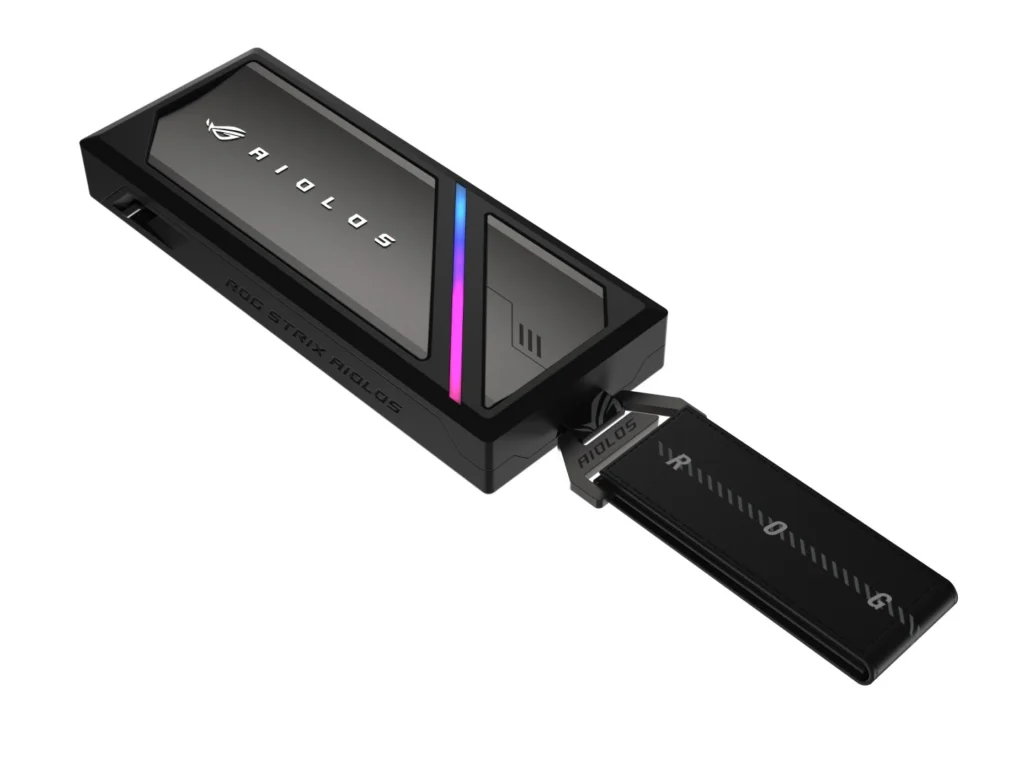
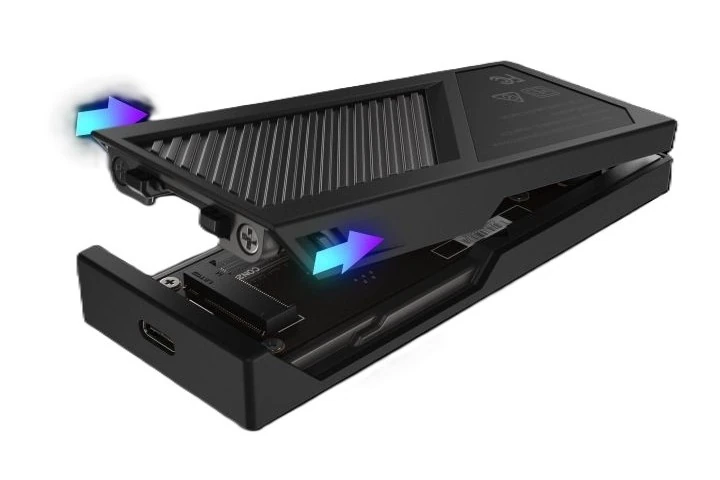
It uses a tool-free installation mechanism and a dual-layer thermal solution with internal pads. Aura Sync RGB is integrated, and ASUS bundles a reinforced hook, braided cable, and wrist strap.
In performance terms, 20Gbps is sufficient for most PCIe 3.0 and entry-level PCIe 4.0 SSDs, though it does not match Thunderbolt-level bandwidth. As with many ROG-branded enclosures, the differentiation appears to be design and ecosystem integration rather than raw throughput.
Taken together, ASUS’ early 2026 ROG Strix updates show a clear pattern: incremental hardware improvements paired with heavier emphasis on customization, aesthetics, and ecosystem cohesion.
There are few radical technological leaps here. Instead, ASUS is refining existing categories — larger AIO displays, dual-mode monitor flexibility, expanded BIOS capacity, enthusiast keyboard internals — while reinforcing the premium positioning of the Strix brand.
Final pricing will ultimately determine how competitive these products are in their respective segments. For now, the direction is clear: ASUS is betting that enthusiasts still value feature density and visual differentiation as much as raw performance.
Subscribe!
Subscribe to our newsletter and be in touch with high-tech news
Top Read
Cooler Master’s G360 Dragon Shadow SE Puts an Infinity Mirror on Your CPU Block for $66
EPOMAKER RT100 PRO Ships With a Screen You Can Rip Out for Extra Keys

Intel Core Ultra 7 270K Plus and Core Ultra 5 250K Plus: 24 Cores, 5.5 GHz, $299

ASUS ProArt KD300 review: compact mechanical keyboard for creators

ASUS Dual RTX 5070 EVO: compact 2.5-slot GPU for SFF builds