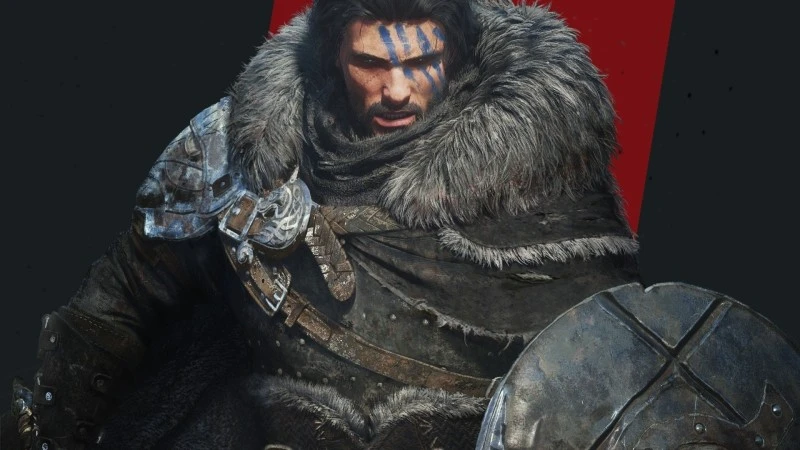
According to the developers, most of the game’s content sits outside the main story, with progression shaped by exploration, systems, and how players choose to spend their time.
Pearl Abyss keeps talking about Crimson Desert, but not in the way studios usually do when приближается релиз. After releasing its first gameplay-focused video, the team sat down with journalist and creator Destin Legarie for a longer conversation. One topic came up quickly—and then stalled: how long the game actually is.
No numbers. On purpose.
According to project PR director Will Powers, avoiding a specific playtime estimate isn’t a marketing trick. It’s a reaction. Any concrete figure, he says, tends to upset someone. If the game sounds too long, players with limited time lose interest. If it sounds short, others dismiss it as lacking depth. Either way, the number becomes the story instead of the game.
So Powers steers the conversation elsewhere.
The main campaign, he explains, is only a slice of what Crimson Desert is built around. The bulk of the experience sits outside the critical path, and a lot of it doesn’t politely wait until you’re “supposed” to engage with it.
That’s not theory. It’s how he played it.
Powers mentioned spending roughly 50 hours in the game while barely touching the main storyline. Most of that time went into side systems: gathering materials, crafting gear, upgrading weapons, and experimenting with how different mechanics interact. Not checklist content. Not filler. Just systems that exist whether or not the story is moving forward.
What’s interesting is how progression is handled around all of this. Crimson Desert doesn’t scale enemy difficulty to the player’s level in the traditional sense. Enemies are fixed. If something feels impossible, there are two ways through it: get better at the combat, or outwork it through preparation and grinding. The game doesn’t force one approach over the other.
That choice is deliberate.
It also explains why Pearl Abyss is hesitant to reduce the experience to a single number. Playtime depends entirely on how players approach the world—and whether they treat the credits as an ending or a checkpoint.
From the way the developers talk about it, Crimson Desert isn’t designed to peak at its finale. It’s meant to keep unfolding afterward, quietly, through systems that don’t announce themselves as “endgame.”
Source: Destin (YouTube)
Subscribe!
Subscribe to our newsletter and be in touch with high-tech news
Top Read
A LEGO game wants RTX 3080: Why LEGO Batman’s system requirements shock everyone

MSI launches XpertStation WS300 with Nvidia GB300 Blackwell: up to 496GB RAM and supercomputer hardware in desktop format

Cooler Master’s G360 Dragon Shadow SE Puts an Infinity Mirror on Your CPU Block for $66
EPOMAKER RT100 PRO Ships With a Screen You Can Rip Out for Extra Keys

Intel Core Ultra 7 270K Plus and Core Ultra 5 250K Plus: 24 Cores, 5.5 GHz, $299
