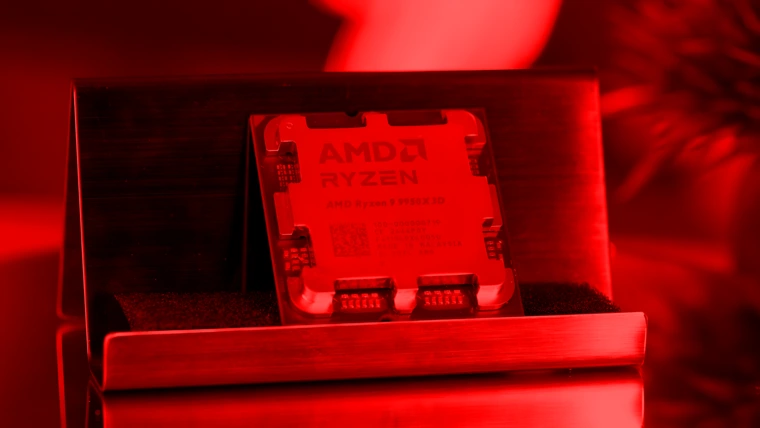
An industry insider says CPUs and motherboards are next in line for price hikes as AI companies absorb chip supply, pushing consumer hardware further down the priority list.
After RAM and SSD prices began climbing, it looks like CPUs and other core PC components are next in line.
According to a report from PC Games Hardware, citing well-known industry insider Jukan (formerly known as Jukanlosreve), the global hardware market is entering a phase where nearly every major component will become more expensive. The driving force behind the trend is the ongoing AI boom, which continues to redirect manufacturing capacity away from consumer hardware.
Jukan says users should prepare for higher prices on mainstream consumer CPUs, motherboards, and laptops, not just high-end or enterprise parts. The warning follows recent price increases for memory components such as DRAM and NAND flash, which have already pushed up the cost of SSDs and RAM kits.
“After memory components like DRAM and NAND flash became more expensive, prices for key PC components – including processors and printed circuit boards – are now rising rapidly,” Jukan said.
Data from investment bank KeyBanc adds more context to the situation. According to the firm, Intel and AMD are considering server CPU price increases of up to 15%, driven by surging demand from AI-focused customers. Delivery times for processors have reportedly stretched from 8-10 weeks to as long as 24 weeks, reflecting tightening supply.
Much of that demand is coming from companies like OpenAI, Amazon Web Services, and Google, which have placed large orders for CPUs to support generative AI workloads. While the initial impact is being felt in the server market, the knock-on effects are expected to reach consumer processors as well.
Intel has already raised prices on consumer CPUs once before, implementing a roughly 10% increase in Q4 of last year. Industry analysts now expect another round of price hikes in the near future.
“Intel already increased consumer CPU prices by 10 percent in the fourth quarter, and further increases are now expected,” Jukan noted.
The insider also points out that Intel is likely to prioritize higher-margin data center and server products, given current market conditions. That shift could further reduce availability of CPUs for desktop PCs and laptops.
“Analysts expect the consumer PC market to suffer the most, since the CPU is the single most expensive component, accounting for up to 30 percent of the total cost of a system,” Jukan said.
CPU Prices Surge as Well: A Major Blow to the Laptop Market
Following the price hikes in memory semiconductors such as DRAM and NAND flash, the costs of core computer components, including Central Processing Units (CPUs) and Printed Circuit Boards (PCBs), are also skyrocketing.… pic.twitter.com/i6hMHtacCV
If the forecasts hold, PC buyers may soon face higher prices across the board, not because of new features or performance gains, but because AI infrastructure is consuming an ever-larger share of global chip production.
To provide the best experiences, we use technologies like cookies to store and/or access device information. Consenting to these technologies will allow us to process data such as browsing behavior or unique IDs on this site. Not consenting or withdrawing consent, may adversely affect certain features and functions.
Functional
Always active
The technical storage or access is strictly necessary for the legitimate purpose of enabling the use of a specific service explicitly requested by the subscriber or user, or for the sole purpose of carrying out the transmission of a communication over an electronic communications network.
Preferences
The technical storage or access is necessary for the legitimate purpose of storing preferences that are not requested by the subscriber or user.
Statistics
The technical storage or access that is used exclusively for statistical purposes.The technical storage or access that is used exclusively for anonymous statistical purposes. Without a subpoena, voluntary compliance on the part of your Internet Service Provider, or additional records from a third party, information stored or retrieved for this purpose alone cannot usually be used to identify you.
Marketing
The technical storage or access is required to create user profiles to send advertising, or to track the user on a website or across several websites for similar marketing purposes.