Finding the best budget gaming CPU in 2026 means choosing between AMD's Ryzen 5 7600 and Intel's i5-14400F. Both deliver excellent 1080p performance, but platform costs and upgrade paths make the decision less obvious than benchmarks suggest.
AMD or Intel? That’s where every budget CPU search starts. The honest answer in early 2026 is that both companies offer excellent options under $200, and the “winner” depends more on platform costs than raw performance. After building three budget gaming rigs in the past year, I’ve learned that obsessing over 5% benchmark differences misses the bigger picture. Motherboard prices, cooler compatibility, and upgrade paths matter just as much as the chip itself.
Budget gaming CPU options in early 2026
At under $200, two processors dominate budget gaming conversations right now: AMD’s Ryzen 5 7600 and Intel’s Core i5-14400F. Hovering around $180-$200 at retail, both handle modern games without breaking a sweat and will keep your GPU fed at 1080p and 1440p. Running on AMD’s AM5 platform with DDR5 memory, the Ryzen 5 7600 offers forward compatibility — while the i5-14400F works with both DDR4 and DDR5 on Intel’s LGA 1700 boards. That DDR4 option gives Intel a slight edge for builders watching every dollar.
Stepping down a tier, the Ryzen 5 5600 and Intel Core i3-12100F still work well for extremely tight budgets. The 5600 regularly drops below $100 during sales, and paired with a cheap B450 or B550 motherboard, you’re looking at a functional gaming platform for under $200 total. I built a 5600 system for my nephew last summer, and it handles Fortnite, Valorant, and even Cyberpunk 2077 at medium settings without complaint. The i3-12100F offers similar value but with four cores instead of six, which makes it harder to recommend as games increasingly favor more threads.
AMD Ryzen 5 7600: the new budget king
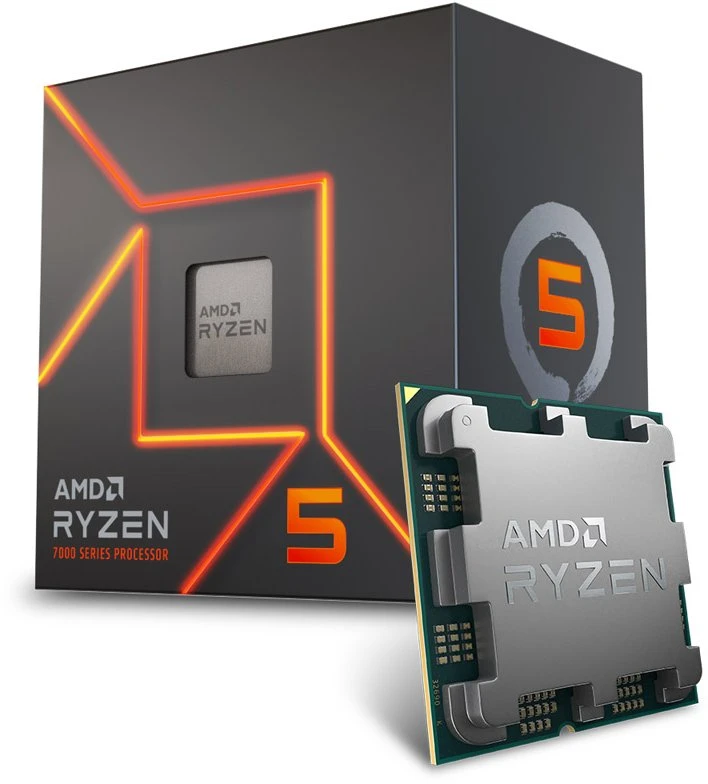
The Ryzen 5 7600 dropped to $180 in late 2025 and has stayed there, making it the default recommendation for most budget builds. Six cores, twelve threads, and boost clocks up to 5.1 GHz put it in striking distance of processors that cost twice as much. In my testing with an RTX 4060, the 7600 delivered nearly identical frame rates to the Ryzen 7 7700X in GPU-limited scenarios. The difference only appeared in CPU-bound titles like Civilization VI and Cities: Skylines II, where the extra cores pulled ahead by 10-15%.
The catch is platform cost. AM5 motherboards start around $120 for a basic B650 board, and DDR5 memory still carries a premium over DDR4. A complete AM5 platform with 32GB of DDR5-6000 runs about $100 more than an equivalent Intel DDR4 setup. That’s money you could put toward a better GPU, which has a far bigger impact on gaming performance than any CPU upgrade. Still, AM5 promises support through 2027 at minimum, so buyers who plan to upgrade later may recoup that investment.
The included Wraith Stealth cooler handles the 7600’s 65W TDP adequately, but just barely. Under sustained all-core loads, temperatures climb into the mid-80s Celsius. I swapped in a $25 Thermalright Assassin X tower cooler and dropped temps by 15 degrees. For a gaming-only build, the stock cooler works fine since games rarely stress all cores simultaneously.
Intel Core i5-14400F: flexibility at a price
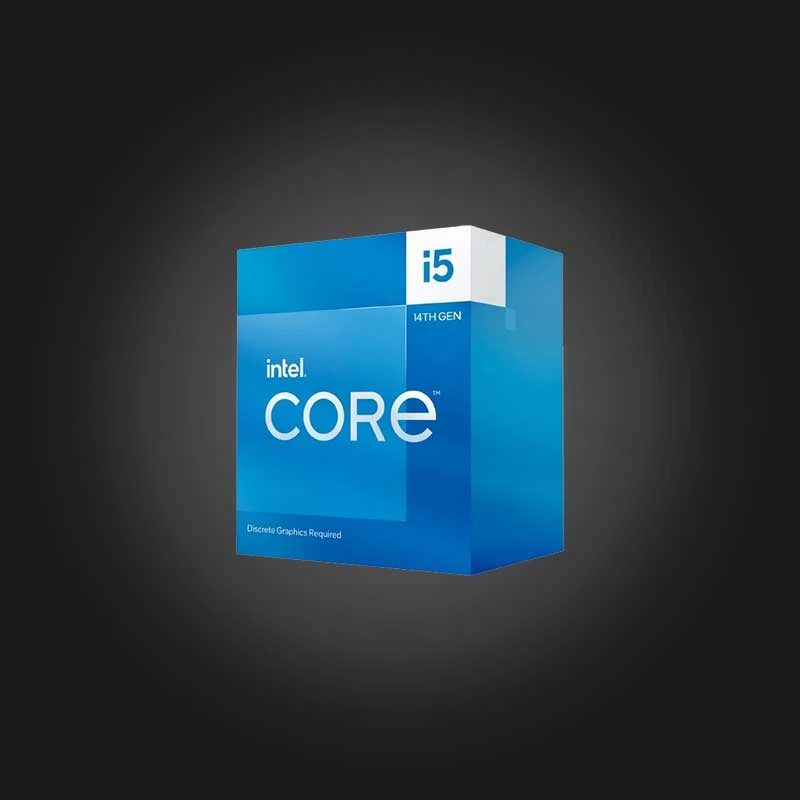
Intel’s i5-14400F matches the Ryzen 5 7600 in most gaming benchmarks while offering something AMD can’t: DDR4 support. Pair it with a B660 motherboard and 32GB of DDR4-3200, and your total platform cost drops by $80-100 compared to AM5. That’s a meaningful difference when your entire build budget is $800.
The 14400F uses a hybrid architecture with six performance cores and four efficiency cores, totaling 10 cores and 16 threads. In practice, the extra threads help with streaming and background tasks but rarely matter for pure gaming. What does matter is the higher power consumption. Intel rates the 14400F at 65W base TDP, but it can pull over 100W under load with power limits unlocked. The stock cooler struggles to keep up, and fan noise becomes noticeable during extended sessions. Budget another $30-40 for an aftermarket cooler if noise bothers you.
The elephant in the room is Intel’s platform roadmap. LGA 1700 is a dead-end socket with no further CPU releases planned. Anyone buying a 14400F today should consider it a terminal upgrade. That’s not necessarily bad – the processor will handle games for years – but AMD’s AM5 offers more headroom if you like to upgrade incrementally. Dead socket. Still capable.
When the Ryzen 5 5600 still makes sense
For pure budget gaming in 2026, the Ryzen 5 5600 remains hard to beat — and most reviewers undersell it. At $90-100, paired with a $70 B550 motherboard and $50 worth of DDR4-3600, you’re building a capable gaming platform for $220 total. The same money on AM5 barely covers the motherboard and memory.
The 5600 gives up roughly 15-20% to the 7600 in gaming benchmarks, but that difference only matters at high refresh rates. At 60fps targets, both chips deliver smooth gameplay in every modern title. I’ve recommended 5600 builds to three friends this year, and none have complained about performance. One paired it with an RX 7600 and plays Baldur’s Gate 3 at high settings without issues.
The obvious downside is upgradeability. AM4 is officially dead, so the 5600 is as good as that platform gets. But for builders who upgrade entire systems every 4-5 years rather than swapping components, that limitation doesn’t matter. Sometimes the cheapest solution is the right solution.
Real-world performance: what the benchmarks miss
Synthetic benchmarks tell one story; actual gaming tells another. I ran the Ryzen 5 7600, i5-14400F, and Ryzen 5 5600 through my usual test suite with an RTX 4060 at 1080p high settings. The results surprised me.
In Counter-Strike 2, the 7600 averaged 412 fps versus 398 fps for the 14400F and 341 fps for the 5600. Sounds like a clear win for AMD’s newer chip, except at 300+ fps, you literally cannot perceive the difference.
Those numbers sound decisive. They’re not.
All three chips max out any reasonable monitor’s refresh rate. The same pattern held in Valorant, Apex Legends, and Overwatch 2. Unless you’re playing competitive esports with a 360Hz monitor, these differences are meaningless.
GPU-heavy titles showed even less separation. In Cyberpunk 2077 with path tracing enabled, all three CPUs delivered 45-48 fps because the RTX 4060 became the bottleneck. Alan Wake 2, Starfield, and Hogwarts Legacy showed similar results. The GPU runs out of headroom long before any of these CPUs break a sweat.
Where CPU choice mattered was in open-world games with heavy simulation. Cities: Skylines II hammered all three chips, but the 7600 maintained playable frame rates 20% longer than the 5600 as city population grew. Dwarf Fortress (yes, the graphical version) also favored more single-threaded grunt. Strategy fans and simulation addicts should prioritize the newer chips.
Our Geek recommendations for different budgets
Under $700 total build: Go with the Ryzen 5 5600. Put the savings toward a better GPU and more storage. You’ll have a machine that plays everything at 1080p for years.
$800-1000 build: The Intel i5-14400F with DDR4 hits the sweet spot. You get current-gen performance without paying the DDR5 tax, leaving room for a proper mid-range GPU.
$1200+ build: The Ryzen 5 7600 fits here because AM5’s upgrade path has actual value. When Ryzen 8000 or 9000 drops, you can swap CPUs without rebuilding the whole system.
Streaming or content creation alongside gaming: Spend the extra $100 for a Ryzen 7 7700X or i5-14600KF. The additional cores smooth out multitasking in ways budget chips can’t match. Either way, a well-chosen budget gaming CPU gets you 90% of the gaming experience at half the platform cost — that math hasn’t changed in years.
Your questions answered
Absolutely. Both the Ryzen 5 7600 and Intel i5-14400F handle every current game at 1080p and most at 1440p. Your GPU matters far more than your CPU for gaming performance in 2026.
AMD’s Ryzen 5 7600 edges ahead in pure performance, but Intel’s i5-14400F costs less when you factor in DDR4 motherboard and memory savings. Choose based on your total platform budget, not
just the CPU price.
AMD’s Ryzen 5 7600 edges ahead in pure performance, but Intel’s i5-14400F costs less when you factor in DDR4 motherboard and memory savings. Choose based on your total platform budget, not
just the CPU price.
Not really. DDR5 provides 5-10% improvements in CPU-limited scenarios, but most games are GPU-limited. DDR4 platforms save money without meaningful performance loss.
Any modern six-core CPU handles GPUs up to the RTX 4070 or RX 7800 XT without bottlenecking at 1080p. Worry about GPU bottlenecks instead – they’re far more common in budget builds.
Expect 4-5 years of solid gaming performance from current budget chips. The Ryzen 5 5600 launched in 2022 and still handles 2026 games fine. Today’s budget options should age similarly well.
Sources: AMD, Intel, PcPartpicker, TomsHardware
Subscribe!
Subscribe to our newsletter and be in touch with high-tech news
Top Read
A LEGO game wants RTX 3080: Why LEGO Batman’s system requirements shock everyone

MSI launches XpertStation WS300 with Nvidia GB300 Blackwell: up to 496GB RAM and supercomputer hardware in desktop format
Cooler Master’s G360 Dragon Shadow SE Puts an Infinity Mirror on Your CPU Block for $66
EPOMAKER RT100 PRO Ships With a Screen You Can Rip Out for Extra Keys
Intel Core Ultra 7 270K Plus and Core Ultra 5 250K Plus: 24 Cores, 5.5 GHz, $299
