
Every Steam Deck model has disappeared from Valve's US store with no official explanation and memory chip shortages may reveal where the company's priorities really lie.
All three Steam Deck models — the 256GB LCD and both OLED variants — now display “out of stock” badges on Valve’s US storefront, and the company hasn’t offered a word of explanation. For a device that defined the handheld PC category and moved over 3 million units worldwide since 2022, this silence from Valve’s Bellevue headquarters feels strategic rather than accidental. Having tracked Steam Deck inventory cycles since buying my 512GB OLED at launch in November 2023, I can say this particular stockout has a different texture than previous supply dips — it’s slower, quieter, and suspiciously well-timed.
The LCD model’s disappearance isn’t exactly fresh information. Valve ended production of the 256GB LCD Steam Deck in December 2025, and units had been trickling out of warehouse inventory for weeks before any official acknowledgment. What caught the hardware community off guard was the OLED shortage — both the standard black and limited-edition white models went completely unavailable through Valve’s official US channels within the same week. I noticed the 512GB OLED flip to “low stock” on January 28th and texted my brother to buy immediately; he waited three days, and by then both models showed full unavailability. That kind of rapid inventory collapse doesn’t happen without a deliberate decision upstream in the supply chain.
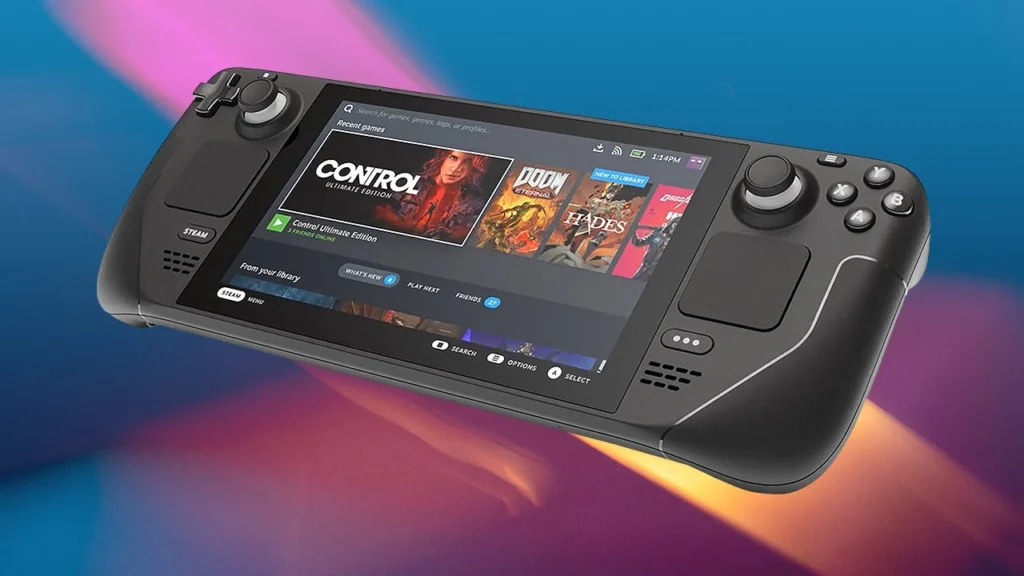

Memory chip shortages are driving the Steam Deck stock crisis
Hardware manufacturing in early 2026 faces a specific constraint that explains most of this situation: LPDDR5 memory prices have spiked roughly 40-60% year-over-year across consumer electronics categories, according to TrendForce’s January 2026 DRAM market report. Valve acknowledged this problem weeks ago when the company warned that chip shortages would force price adjustments across its hardware lineup and potentially delay both the Steam Machine console and the Steam Frame VR headset. The timing of that announcement and this Steam Deck drought isn’t coincidental — it’s supply chain triage playing out where customers can see it.
After reviewing TrendForce’s allocation data and cross-referencing with DigiTimes’ semiconductor supply tracking, a clearer picture emerges. Samsung, Micron, and SK Hynix — the three dominant LPDDR5 suppliers — have been prioritizing automotive and data center contracts over consumer electronics since Q3 2025, and Valve’s relatively small order volumes put the company near the back of the line. ASUS ROG Ally shipments slowed noticeably through Q4 2025 for the same reason, and Lenovo’s Legion Go faced similar allocation cuts across European and North American markets. The difference is that ASUS and Lenovo communicated delays directly to retail partners, while Valve maintained its characteristic sphinx-like silence — a pattern anyone who followed the Steam Controller discontinuation or the Index headset shortages of 2020 will recognize immediately.
Valve is choosing new products over its proven one
Valve has made a calculated choice to reserve its available LPDDR5 allocation for the Steam Machine and Steam Frame launches, both reportedly targeting Q2 2026 release windows. The evidence supports this reading directly: three weeks elapsed between Valve’s public acknowledgment of memory shortages and the Steam Deck going fully unavailable, which means someone in Bellevue watched inventory deplete without redirecting chip allocations to maintain Deck production. That’s observable priority-setting, not an unforeseeable crisis.
From a corporate strategy perspective, the logic tracks — reluctantly. Neither the Steam Machine nor the Steam Frame can afford a botched debut the way the Steam Deck can absorb a temporary stockout. The Deck carries three years of brand equity, 10,000+ verified game compatibility ratings, and a community passionate enough to troubleshoot Proton issues on Reddit at 2 AM; it can survive a few months of scarcity without permanent category damage. New product launches get one shot at first impressions, and Valve apparently decided to bet its limited silicon on those fresh opportunities rather than defending existing ground.
Most tech coverage frames this as an unavoidable supply chain crisis, and I think that framing is too generous. Valve chose to announce the Steam Machine and Steam Frame before securing memory allocation sufficient for all three product lines simultaneously. That’s a strategic gamble, not a natural disaster, and it penalizes exactly the customers whose early Steam Deck purchases justified Valve’s expansion into new hardware categories. You don’t reward the people who championed your breakout product by quietly starving it of components.
Where you can still buy a Steam Deck despite US shortages
The situation outside the United States looks meaningfully better, though it varies by region. Valve’s German storefront showed both OLED models available as of February 11th, and UK retailer Currys listed the 512GB unit at £569 — roughly £20 above Valve’s direct pricing from November 2025, but available for next-day delivery. Smaller European markets like Portugal and the Czech Republic are spottier, with 3-5 day stockout cycles reported on community tracking sites throughout early February. Importing from Europe to the US remains possible but adds $40-80 in shipping and complicates warranty service through Valve’s US support infrastructure.
On the secondary market, pricing has stayed surprisingly restrained — at least so far. eBay listings for new-in-box 512GB OLED units hover around $600-650, representing an 18-25% markup over the $549 MSRP. Compare that to the 2x-3x scalper premiums that plagued PlayStation 5 and Xbox Series X availability windows in 2020-2021, and this markup looks almost modest. The relative calm either signals that handheld PC demand has matured past its hype-driven peak, or it means resellers haven’t yet grasped the likely duration of this shortage — I’d give it two weeks before pricing adjusts upward if Valve doesn’t announce a restock date.
Pricing after the Restock won’t look the same
The question Valve will eventually need to answer involves whether the Steam Deck’s current $399/$549 price points survive the return to availability. If LPDDR5 costs have genuinely spiked 40-60% — and TrendForce, IC Insights, and Valve’s own public statements all indicate they have — maintaining current pricing means absorbing significant margin compression on every unit shipped. Valve has historically eaten hardware losses to drive Steam store software revenue, but even Gabe Newell’s privately held operation has limits on sustainable red ink.
A $50-100 price increase would push the Steam Deck into uncomfortable competitive territory against the ROG Ally X at $799 and the upcoming MSI Claw 2. Valve’s core advantage has always been the combination of SteamOS polish and aggressive price-to-performance ratio; sacrifice the latter, and you’re betting entirely on software ecosystem lock-in justifying a smaller hardware discount. That bet might work for existing Steam users with 500-game libraries, but it dramatically weakens the pitch to newcomers weighing their first handheld PC purchase. Every week the Steam Deck stays unavailable in the US is another week where those potential first-time buyers discover that the ROG Ally X runs their games perfectly well. Meanwhile, AYANEO’s NEXT 2 is positioning itself as a direct Steam Deck killer with Ryzen AI Max and a 116Wh battery that dwarfs the Deck’s 50Wh cell — the kind of spec gap that gets harder to ignore when Valve’s store page just says “out of stock.” Some of those newcomers won’t come back.
Steam Deck FAQ
Valve hasn’t officially explained the Steam Deck shortage, but the company acknowledged in late January 2026 that memory chip supply constraints would impact pricing and availability across its entire hardware lineup. Industry data from TrendForce shows LPDDR5 allocation tightening 18% quarter-over-quarter, with tier-one suppliers prioritizing automotive and data center clients. The timing strongly suggests Valve is reserving limited memory chip supply for the upcoming Steam Machine console and Steam Frame VR headset — both targeting Q2 2026 launches — rather than maintaining Steam Deck production volumes. This appears to be a deliberate prioritization decision rather than an unexpected supply disruption.
No restock date has been announced as of mid-February 2026, and Valve’s communication history suggests customers won’t receive advance notice when units return. During previous supply disruptions — including the original 2022 reservation queue and the late-2023 OLED launch — Valve simply updated store page availability without prior announcement. Monitoring the official Steam store directly and enabling alerts through third-party stock trackers like HotStock or NowInStock remains the most reliable approach. Based on typical memory allocation cycles and Valve’s likely production scheduling, a late March or April restock seems plausible, though potentially at revised pricing.
European Valve stores continue to show OLED model availability in most major markets, with Germany and the UK maintaining the most consistent stock as of early February 2026. UK retailer Currys and German retailer MediaMarkt both carry units at modest markups over Valve’s direct pricing. Importing to the US adds $40-80 in shipping costs depending on carrier and speed, and warranty service through Valve’s US support team may be complicated for units purchased through European channels. Secondary markets like eBay have new-in-box units at $600-650 for the 512GB OLED — an 18-25% premium that remains far below the scalper pricing seen during previous major console shortages.
Valve explicitly warned that memory chip shortages would force price adjustments across its hardware products, making a Steam Deck price increase more likely than not. LPDDR5 costs have risen 40-60% year-over-year according to multiple industry analysts, and maintaining $399/$549 price points while absorbing those increases would require Valve to accept deeper hardware losses than the company has historically tolerated. A $50-100 increase across both OLED models would narrow the price gap against the ASUS ROG Ally X ($799) and weaken one of the Steam Deck’s primary competitive advantages. Valve hasn’t confirmed specific pricing changes, but the economic math makes holding current prices difficult without cutting component quality elsewhere.
Valve permanently ended production of the 256GB LCD Steam Deck in December 2025, and no replacement at that price tier has been announced. The OLED models launched in November 2023 fully replaced the LCD lineup, offering improved screens, better battery life, and revised ergonomics at higher price points. Any remaining LCD units available through retailers or secondary markets represent old inventory rather than ongoing production. Valve has shown no indication of reintroducing an LCD-based model, though the Steam Machine — expected to use similar APU architecture — may eventually serve budget-conscious buyers who primarily want a stationary Steam device.
That depends on how much you value SteamOS and your existing Steam library versus raw hardware performance and immediate availability. The ROG Ally X delivers stronger GPU throughput and a brighter 1080p display at $799, while the Lenovo Legion Go offers a detachable controller design that some users prefer for desktop-mode gaming. If your Steam library exceeds a few hundred titles and you value verified compatibility ratings, waiting for the Deck restock — even at potentially higher pricing — probably makes sense. If you need a device in the next 30 days and don’t mind running Steam through Windows, the Ally X, MSI Claw 2, and AYANEO NEXT 2 with its Ryzen AI Max chip are all genuinely capable alternatives rather than compromises.
Sources: TrendForce DRAM Market Report (January 2026), DigiTimes, PCMag, Steam Valve, HotStock
Subscribe!
Subscribe to our newsletter and be in touch with high-tech news
Top Read
A LEGO game wants RTX 3080: Why LEGO Batman’s system requirements shock everyone

MSI launches XpertStation WS300 with Nvidia GB300 Blackwell: up to 496GB RAM and supercomputer hardware in desktop format

Cooler Master’s G360 Dragon Shadow SE Puts an Infinity Mirror on Your CPU Block for $66
EPOMAKER RT100 PRO Ships With a Screen You Can Rip Out for Extra Keys

Intel Core Ultra 7 270K Plus and Core Ultra 5 250K Plus: 24 Cores, 5.5 GHz, $299
