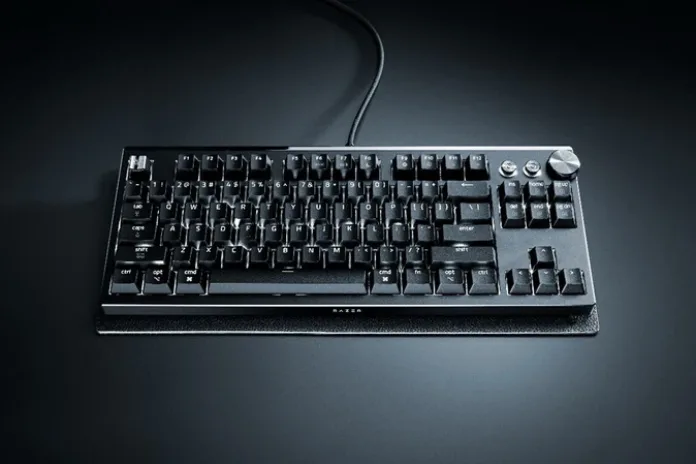
Razer's $499 Huntsman Signature Edition is essentially a V3 Pro in a machined aluminum dress. That's either the most honest luxury keyboard pitch in recent memory — or the most expensive way to buy keycaps you already own.
Razer’s Huntsman Signature Edition, available exclusively at Razer.com starting February 22nd, costs $499.99 and makes no pretense about what you’re actually buying — and it’s not the first time Razer has gone this route. The Boomslang 20th Anniversary Edition established the same playbook: take proven internals, upgrade the materials and finish, charge a collector’s premium. The pattern works because a specific buyer exists for it.
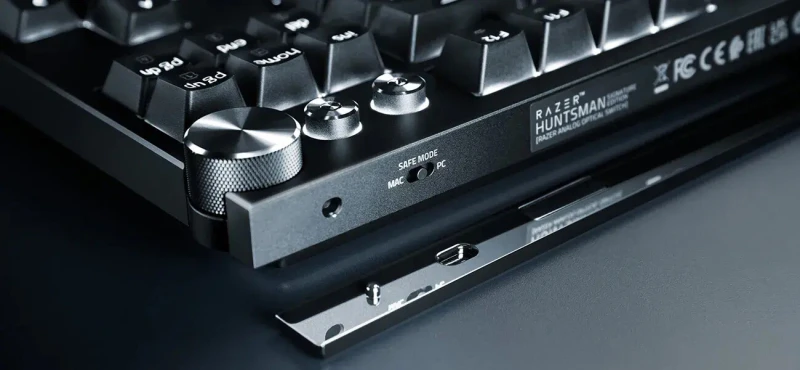
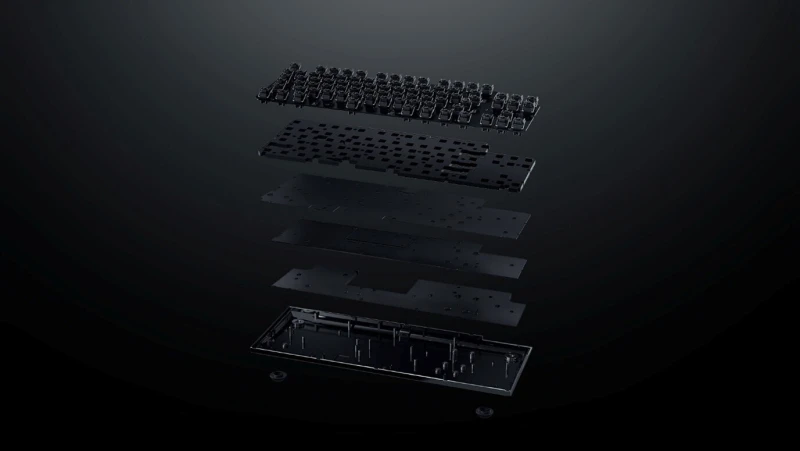
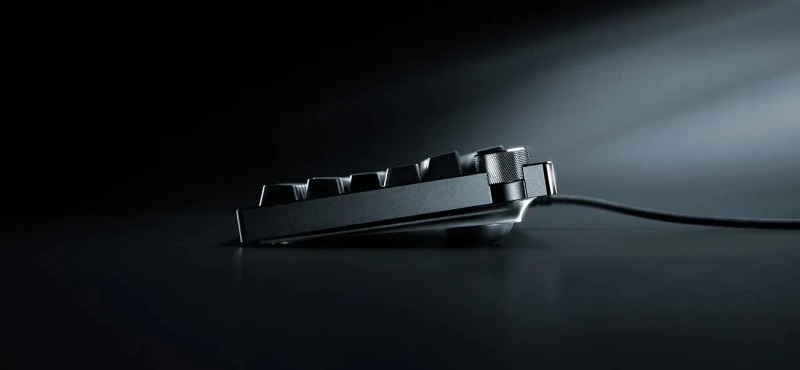
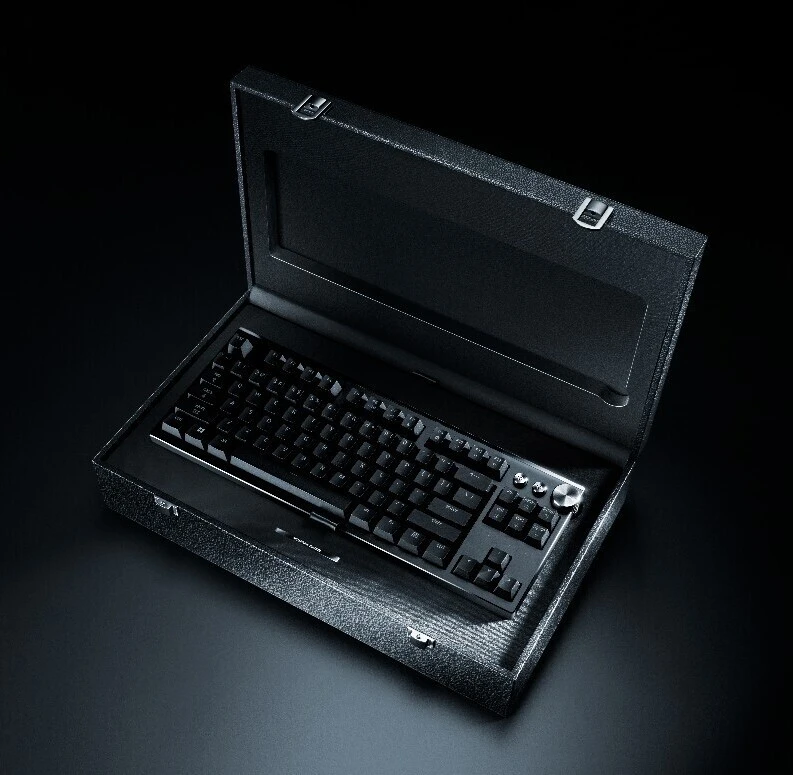
The internals are identical to the Huntsman V3 Pro — the same Gen 2 analog optical switches, the same 8,000 Hz polling rate, the same doubleshot shinethrough PBT keycaps — and the $300 premium over the standard model buys you a CNC-machined 6063 aluminum chassis with an anodized top and a PVD mirror finish on the bottom plate. Razer isn’t selling you better technology. The company is selling you the same technology in a more expensive container, and the pitch is surprisingly coherent once you understand who the target audience actually is.
Tom’s Hardware reviewed the V3 Pro favorably when it launched, praising the Gen 2 switch implementation and the polling rate performance, while noting that the chassis itself felt like a missed opportunity — functional, but not particularly distinguished for a keyboard occupying the upper tier of the gaming peripheral market. The Signature Edition addresses that specific criticism directly, which is either responsive product development or an acknowledgment that Razer shipped an incomplete flagship and decided to charge $499 for the completion.
What you’re actually getting for $500
The mechanical heart of the Huntsman Signature Edition hasn’t changed from the V3 Pro, and that’s not necessarily a problem. Razer’s Gen 2 analog optical switches actuate via infrared light interruption rather than mechanical contact, eliminating the physical wear points that degrade traditional membrane or mechanical switches over years of heavy use. The 8,000 Hz polling rate — which samples the keyboard’s state 8,000 times per second versus the standard 1,000 Hz — requires a wired connection to function, meaning USB-C is the only mode that unlocks the full feature set. Wireless at 8,000 Hz would demand battery technology that doesn’t yet exist at reasonable capacity, so the wired-only requirement is a hardware reality rather than a feature limitation Razer chose arbitrarily.
Analog switch design enables several features that have become genuinely significant in competitive gaming contexts. Rapid Trigger, which dynamically adjusts actuation points based on how far a key is depressed rather than using a fixed threshold, allows faster key reactivation during rapid directional changes — the kind of millisecond differences that matter in CS2 or Valorant at high ranks. Customizable actuation points let users set different sensitivity profiles per-key, which experienced players use to create lighter triggers on movement keys while keeping heavier actuation on less-frequently used bindings. The analog input mode for racing game simulation is a niche feature that almost nobody uses but adds genuine versatility to a keyboard that can technically function as a game controller for throttle and brake inputs in titles like iRacing or Assetto Corsa.
SOCD and Snap Tap: The banned feature razer is selling as a selling point
Snap Tap — Razer’s branding for SOCD (Simultaneous Opposing Cardinal Directions) input handling — deserves specific attention because the company is marketing a feature that the two largest competitive gaming ecosystems have explicitly prohibited. In standard keyboard behavior, pressing Left and Right simultaneously creates an input conflict that typically cancels both commands; SOCD handling resolves that conflict by prioritizing the most recently pressed key, allowing players to initiate strafes and direction reversals faster than traditional input hardware permits. Valve’s CS2 competitive updates in 2024 banned SOCD at the software level. Tournament organizers across Valorant’s VCT circuit prohibit keyboards with this functionality. FACEIT’s anti-cheat flags Snap Tap usage on their platform.
None of this appears in Razer’s marketing copy. After tracking competitive gaming peripheral controversies since the SOCD debate first surfaced in 2023, the product page’s framing of Snap Tap as simply “allowing you to quickly actuate different keys” without tournament context reads as deliberately incomplete rather than accidentally incomplete. Razer knows what Snap Tap is and knows where it’s banned — the company’s esports partnerships make ignorance implausible. Buyers who plan to use this keyboard in competitive online environments should verify their platform’s current policies before the purchase, particularly since SOCD enforcement continues evolving across major anti-cheat implementations.
The design upgrade is real, even if it’s the only upgrade
Set aside the pricing discussion for a moment, because the aluminum chassis work is genuinely impressive. The standard Huntsman V3 Pro’s plastic body had adjustable height feet that felt imprecise and a back panel with branding that sat uncomfortably between functional and decorative. The Signature Edition replaces all of that with 6063 aluminum milled to tight tolerances — the same alloy grade used in machined custom keyboards from boutique manufacturers like Rama Works and GMMK Pro, which typically retail at $200-350 before switches and keycaps. The PVD mirror finish on the bottom plate creates a visual effect that’s either spectacular or ostentatious depending on your desk setup, but it’s undeniably more considered than the glossy plastic it replaces.
The tradeoffs are real, though. Losing the dual-stage height adjustment means the Signature Edition ships at a fixed typing angle — a decision that works if Razer’s chosen angle matches your ergonomic preference and doesn’t if it doesn’t. Custom keyboard enthusiasts have spent considerable forum energy debating optimal typing angles (7-10 degrees is the common recommendation), and removing adjustability from a $500 keyboard to preserve aesthetic cleanliness is a design choice that prioritizes how the board looks over how it adapts to individual users. The keycaps — doubleshot PBT, shinethrough legends — are identical to what ships with the $200 V3 Pro, which means the $300 premium goes entirely into aluminum and PVD treatment rather than any improvement to the surface your fingers actually touch.
Who should consider this and who shouldn’t
For the specific user who wants Razer’s polling rate and analog switch implementation without the standard V3 Pro’s visual compromises — someone building a clean, high-end desk setup where a plastic gaming keyboard looks out of place next to machined metal peripherals — the Signature Edition makes sense at $499. It’s priced competitively against boutique custom keyboards with equivalent build quality, and it ships assembled with Razer’s warranty and software ecosystem rather than requiring hours of hand-assembly and soldering. The appeal is real, even if narrow.
For competitive gamers who want the 8,000 Hz polling rate and Rapid Trigger benefits, the standard Huntsman V3 Pro at $199 delivers identical performance in a less premium chassis. The switch firmware, polling rate implementation, and Rapid Trigger algorithm are unchanged between models — every competitive advantage the Signature Edition provides, the V3 Pro provides too, at $300 less. Spending the difference on a monitor upgrade, a better mouse, or a pad for your rent would produce more measurable impact on your actual gaming outcomes than an aluminum bottom plate, regardless of how good it looks in a desk tour video.
Razer Huntsman Frequently Asked Questions
The Razer Huntsman Signature Edition is a $499.99 gaming keyboard built on the Huntsman V3 Pro platform, featuring a CNC-machined 6063 aluminum chassis with an anodized top panel and PVD mirror-finish bottom plate. It uses Razer’s Gen 2 analog optical switches with an 8,000 Hz polling rate (wired connection required), supports Rapid Trigger, Snap Tap SOCD input handling, customizable actuation points, and analog input emulation for racing game controllers. The keyboard is available exclusively through Razer.com starting February 22nd, 2026, and ships in a single colorway with full per-key RGB backlighting.
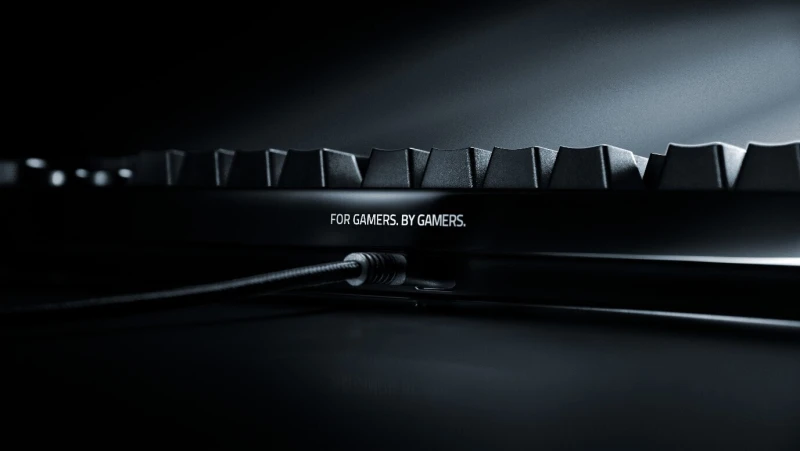
The internal components — Gen 2 analog optical switches, 8,000 Hz polling rate electronics, Rapid Trigger firmware, and doubleshot PBT keycaps — are identical between both models. The Signature Edition replaces the V3 Pro’s plastic chassis with CNC-machined 6063 aluminum featuring an anodized top and PVD mirror finish bottom, removes the dual-stage height adjustment feet, and eliminates the branded text on the back panel in favor of a minimalist design with a single centered Razer logo. The $300 price difference between the V3 Pro ($199) and Signature Edition ($499) reflects the chassis material upgrade exclusively.
Snap Tap (Simultaneous Opposing Cardinal Directions handling) is banned in several major competitive gaming contexts. Valve disabled SOCD input processing in CS2’s competitive mode through a 2024 update, and tournament organizers for Valorant’s VCT circuit prohibit keyboards with active SOCD handling. FACEIT’s anti-cheat software monitors for Snap Tap usage on their platform. Casual players in non-competitive environments can use the feature freely, but anyone participating in ranked or tournament play should verify their specific platform’s current policy before purchasing a keyboard marketed around this functionality.
The 8,000 Hz polling rate — which samples keyboard input 8,000 times per second compared to the standard 1,000 Hz — requires data transfer bandwidth that current wireless protocols can’t deliver at sufficient battery efficiency for gaming use. A wireless connection at 8,000 Hz would drain a realistic battery capacity in hours rather than days, making the feature impractical without wired power delivery. The Huntsman Signature Edition connects via USB-C and must remain wired to access the full 8,000 Hz mode; Razer has not announced wireless variants of either this model or the underlying V3 Pro platform.
The value calculus depends entirely on what you’re optimizing for. In pure gaming performance terms, the Huntsman V3 Pro at $199 provides identical switch performance, identical polling rate, and identical Rapid Trigger implementation — spending $300 more on the Signature Edition produces zero measurable competitive advantage. For users who prioritize desk aesthetics, the aluminum chassis with PVD finish is legitimately premium construction that competes with boutique custom keyboards costing $200-400 before you add switches and keycaps. The Signature Edition makes sense as a luxury purchase for someone who wants Razer’s software ecosystem and warranty support in a visually premium form factor; it makes less sense as a performance upgrade.
Sources: Tom’s Hardware, Razer Official
Subscribe!
Subscribe to our newsletter and be in touch with high-tech news
Top Read
A LEGO game wants RTX 3080: Why LEGO Batman’s system requirements shock everyone

MSI launches XpertStation WS300 with Nvidia GB300 Blackwell: up to 496GB RAM and supercomputer hardware in desktop format

Cooler Master’s G360 Dragon Shadow SE Puts an Infinity Mirror on Your CPU Block for $66
EPOMAKER RT100 PRO Ships With a Screen You Can Rip Out for Extra Keys
Intel Core Ultra 7 270K Plus and Core Ultra 5 250K Plus: 24 Cores, 5.5 GHz, $299
