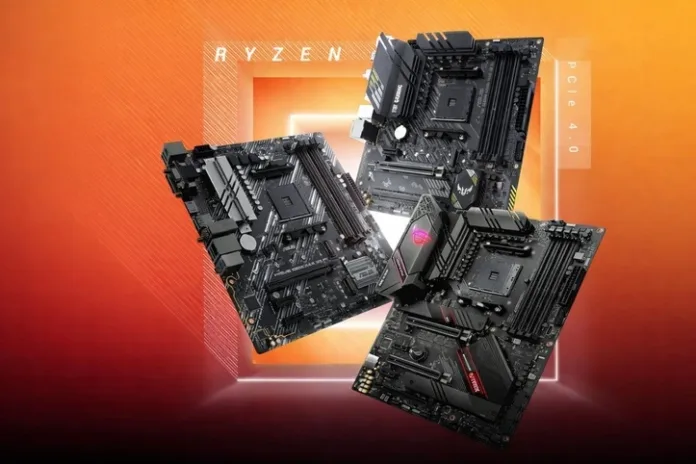
Nine-year-old AM4 boards are outselling AMD's current platform across every major retailer. The reason isn't nostalgia — it's math, and the numbers don't favor AM5.
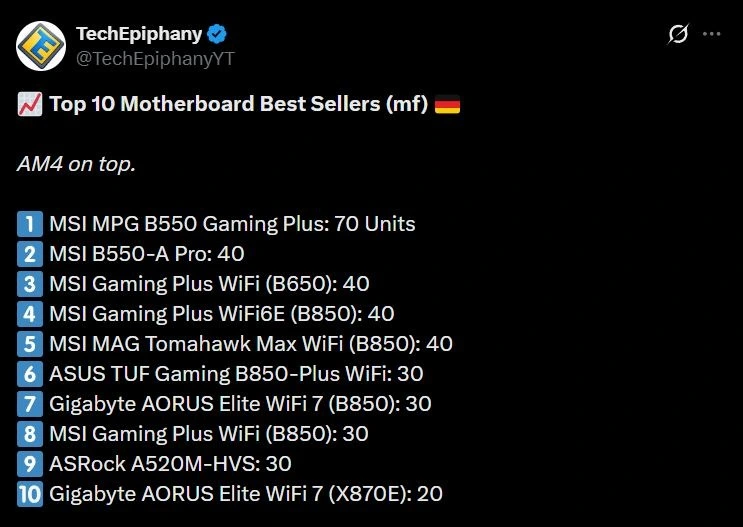
AMD’s B550 motherboard sales tell an uncomfortable story about the company’s current-generation platform strategy. Across Amazon’s US, Canadian, and UK storefronts — plus Germany’s Mindfactory, the largest independent PC hardware retailer in Europe — AM4 boards built on the B550 chipset consistently occupy the top positions in bestseller rankings as of early 2026. For a chipset that launched alongside the Ryzen 5000 series in October 2020 and supports a socket introduced nearly nine years ago, that kind of staying power isn’t a compliment to AM4’s longevity — it’s an indictment of AM5’s value proposition.
The raw economics explain most of this persistence without requiring any complicated analysis. A competent B550 motherboard from MSI, Gigabyte, or ASUS runs $100-120 at current street prices, and pairing it with a Ryzen 5 5600X (regularly available for $120-140) plus 32GB of DDR4-3600 ($55-65) creates a functional gaming and productivity system for roughly $280-320 in core components. Attempting the same build on AM5 — say, a B650 board with a Ryzen 5 7600X and 32GB of DDR5-6000 — pushes that figure north of $450, and that’s before accounting for the B650 boards that actually have decent VRM configurations rather than the stripped-down models that technically hit the $140 price point. The gap isn’t subtle; it’s $130-170 of real money that buys a better GPU, more storage, or simply stays in the buyer’s wallet.
DDR5 Pricing Remains the Anchor Dragging AM5 Adoption Down
Memory costs deserve their own section because they distort the entire platform comparison in ways that AMD seemingly didn’t anticipate — or chose to ignore. DDR5-6000 kits have dropped from their absurd 2023 launch pricing, but a decent 32GB CL30 kit still runs $85-100 from Kingston, G.Skill, or Corsair, compared to $55-65 for equivalent DDR4-3600 CL16 modules that deliver nearly identical real-world gaming performance on AM4. That $30-40 memory premium doesn’t sound catastrophic in isolation, but it compounds with the motherboard price gap and the processor cost difference to create a platform tax that budget-conscious builders — the exact demographic that drives volume sales — can’t justify.
What makes this situation particularly frustrating for AMD is that DDR4 prices have actually risen over the past year, climbing roughly 15-20% as manufacturers shift production capacity toward DDR5 wafers. Under normal market logic, shrinking DDR4 supply should have pushed budget builders toward DDR5 by making the old standard less attractive. Instead, the DDR4 price increase merely narrowed the gap from “massive” to “significant” — and AM4 boards kept selling because the total platform cost still favors last-generation hardware by a meaningful margin. I’ve watched the Mindfactory sales charts weekly since mid-2025, and the MSI MAG B550 Tomahawk has appeared in the top 10 motherboard bestsellers for 37 of the past 40 weeks, which is frankly absurd for a board that debuted during the Trump administration.
Ryzen 5000 Processors Refuse to Become Obsolete
The B550 sales phenomenon wouldn’t exist if AM4 processors couldn’t keep up, and the uncomfortable truth for AMD’s marketing department is that Ryzen 5000 chips remain genuinely adequate for the majority of gaming and productivity workloads in 2026. A Ryzen 5 5600X paired with a modern GPU — an RTX 4070 or RX 7800 XT, say — delivers frame rates within 8-15% of a Ryzen 5 7600X in most titles at 1440p, where GPU bottlenecks flatten the CPU performance curve anyway. For users running 1080p competitive shooters where CPU overhead matters more, the gap widens to 15-25%, but those players tend to prioritize frame rates they already exceed rather than chasing diminishing returns.
After helping three separate friends build budget gaming rigs over the past six months, every conversation followed the same arc: initial excitement about AM5 and “future-proofing,” followed by a sobering spreadsheet comparing total build costs, ending with a Ryzen 5 5600X order on Amazon. The pattern isn’t unique to my social circle — Reddit’s r/buildapc and r/buildapcsales communities have effectively made the B550 + Ryzen 5600X combination the default budget recommendation, and the upvote ratios on those posts suggest broad consensus rather than contrarian nostalgia.
AMD’s Upgrade Path Argument Has a Shelf-Life Problem
AMD’s standard response to AM4’s persistence is that AM5 offers a longer upgrade runway — buy a B650 board today, and you’ll be able to drop in a Ryzen 8000 or even 9000 series chip when prices stabilize. That argument has merit on paper, but it relies on assumptions that budget builders have historically ignored. The same “future-proofing” pitch sold AM4 in 2017, and the people still buying B550 boards in 2026 are living proof that the strategy works: they bought a cheap platform, upgraded the CPU once or twice within the socket’s lifetime, and extracted seven-plus years of usable performance without ever spending flagship money.
My contrarian take is that AM5’s upgrade path actually hurts AMD’s short-term volume more than it helps. Telling a budget buyer “spend $150 more now so you can upgrade later” assumes that buyer has $150 of discretionary budget available — and if they did, they’d probably spend it on a better graphics card rather than a motherboard chipset with theoretical future value. The AM4 buyers aren’t making an irrational choice; they’re making the economically optimal choice for a platform they’ll replace entirely in 3-4 years when AM5 or AM6 reaches the pricing sweet spot that AM4 occupies today. WCCFtech’s reporting on this sales data aligns with what component retailers have been saying privately: the mid-range PC market hasn’t moved to DDR5 at the pace anyone expected, and AMD’s product stack reflects aspirations more than it reflects demand.
Whether AMD addresses this with aggressive B650 price cuts, a DDR4-compatible AM5 variant (unlikely but not impossible given Intel’s dual-memory approach with LGA 1700), or simply waits for DDR5 costs to normalize remains unclear — but every quarter that B550 tops the bestseller charts is a quarter where AM5 adoption falls further behind AMD’s internal projections. The clock is ticking, and the market is speaking in a language that’s hard to misinterpret.
Motherboards Frequently Asked Questions
The primary driver is total platform cost rather than any single component’s price advantage. A complete AM4 build with a B550 board, Ryzen 5 5600X, and 32GB DDR4-3600 runs $280-320 in core components, versus $450+ for a comparable AM5 configuration with B650, Ryzen 5 7600X, and DDR5-6000 memory. Budget and mid-range builders — who represent the volume segment of the PC market — consistently choose the cheaper platform because the gaming performance gap at 1440p is only 8-15%, which most users can’t perceive without a frame counter overlay. Data from Amazon US, Amazon UK, Amazon Canada, and Germany’s Mindfactory all show B550 boards dominating bestseller lists through early 2026.
For budget and mid-range gaming builds targeting 1080p or 1440p, a B550 board paired with a Ryzen 5 5600X or Ryzen 7 5800X3D remains a strong value proposition that delivers genuinely competitive frame rates with modern GPUs like the RTX 4070 or RX 7800 XT. The platform’s weakness is forward-looking: AM4 won’t support future processor generations, PCIe 4.0 limits NVMe SSD bandwidth compared to AM5’s PCIe 5.0, and DDR4 memory bandwidth caps become more relevant as games demand more from system memory. If you plan to keep the system for 2-3 years before a complete rebuild, B550 is hard to beat on value; if you’re planning a 5+ year platform, AM5’s upgrade path starts making more financial sense.
The core component gap — motherboard, CPU, and RAM — runs approximately $130-170 depending on specific part choices and current sale pricing. A B550 + Ryzen 5 5600X + 32GB DDR4-3600 configuration averages $280-320, while a B650 + Ryzen 5 7600X + 32GB DDR5-6000 configuration averages $450-490 at typical US retail prices as of February 2026. The gap narrows somewhat if you catch AM5 components on sale — Black Friday 2025 temporarily brought some B650 boards under $130 — but at regular pricing, the AM4 cost advantage remains substantial enough to redirect $130+ toward a better GPU, which has a larger impact on gaming performance than the CPU platform difference.
DDR5 memory pricing has declined roughly 40% from its 2023 peak but has stabilized over the past two quarters, suggesting the rapid price erosion phase may be ending. Industry analysts at TrendForce project another 10-15% decline through late 2026 as production capacity expands, which would bring 32GB DDR5-6000 kits closer to $70-85 — narrowing the DDR4 gap to $15-25 rather than the current $30-40. Combined with potential B650/B850 motherboard price cuts as AMD pushes AM5 adoption, the total platform cost difference could shrink to under $100 by Q4 2026, which might finally tip the value calculus for budget builders.
If you need a functional gaming system today and your budget is under $800 total, the Ryzen 5 5600X on B550 delivers the best performance-per-dollar available in the AMD ecosystem — no waiting required. If your budget stretches to $1,000+ or you can wait 6-9 months, the Ryzen 5 7600X on AM5 offers meaningful advantages in productivity workloads, PCIe 5.0 storage support, and a CPU upgrade path that extends through at least 2027-2028. The Ryzen 7 5800X3D represents an interesting middle option for pure gaming: its 3D V-Cache design trades blows with the 7600X in many titles despite running on the older platform, though its $300+ street price undercuts the budget argument entirely.
AMD announced the AM4 socket in 2016 and launched the first consumer processors for it — the Bristol Ridge A-series APUs — in September of that year, with Ryzen 1000 series following in March 2017. The platform has seen five generations of processor support (Ryzen 1000 through 5000), multiple chipset revisions (A320 through X570), and one memory standard (DDR4) across its entire lifespan. While individual B550 boards debuted in June 2020, the socket compatibility stretching back to 2016/2017 makes AM4 one of the longest-lived consumer CPU platforms in modern PC history — rivaled only by Intel’s LGA 1151, which spanned two incompatible generations despite sharing the same physical socket.
Sources: WCCFtech, Amazon US Bestsellers, Mindfactory Sales Data, TrendForce DRAM Reports
Subscribe!
Subscribe to our newsletter and be in touch with high-tech news
Top Read
A LEGO game wants RTX 3080: Why LEGO Batman’s system requirements shock everyone

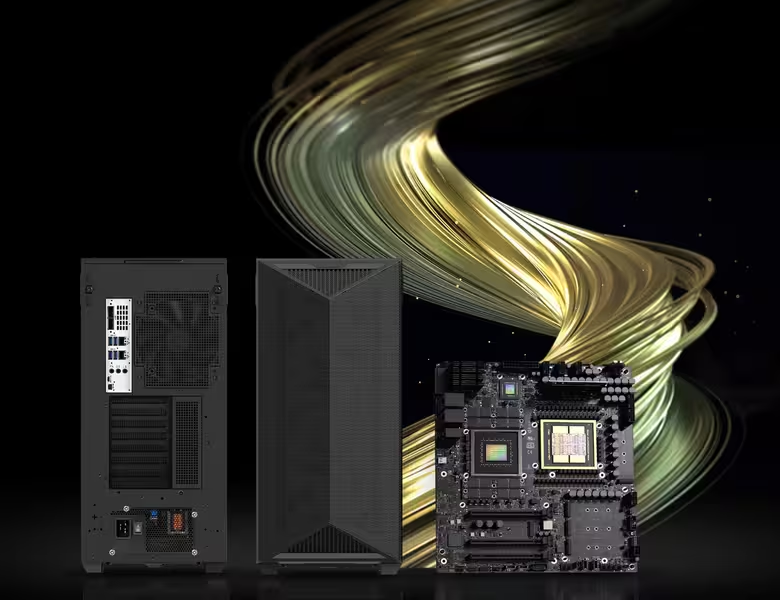
MSI launches XpertStation WS300 with Nvidia GB300 Blackwell: up to 496GB RAM and supercomputer hardware in desktop format
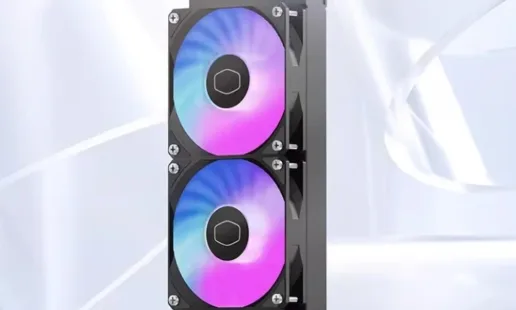
Cooler Master’s G360 Dragon Shadow SE Puts an Infinity Mirror on Your CPU Block for $66
EPOMAKER RT100 PRO Ships With a Screen You Can Rip Out for Extra Keys
Intel Core Ultra 7 270K Plus and Core Ultra 5 250K Plus: 24 Cores, 5.5 GHz, $299
